FitPAWS Balance Bone: Worth the Investment?
4th Apr•4 min read
The FitPAWS Peanut review space is crowded with enthusiasm, but I approach inflatable dog training gear the way I approach most things: does it survive weekly use, justify its footprint in a small space, and deliver measurable calm for the money? After testing claims against real-world routines and talking to owners who've built dog peanut balance trainer systems into daily schedules, the FitPAWS Peanut earns its place, not because it's magical, but because it solves a specific, costly problem: dogs with nowhere to burn brain energy indoors.
Let me walk you through what makes this tool different, how it stacks against comparable options, and whether the investment makes sense for your household.
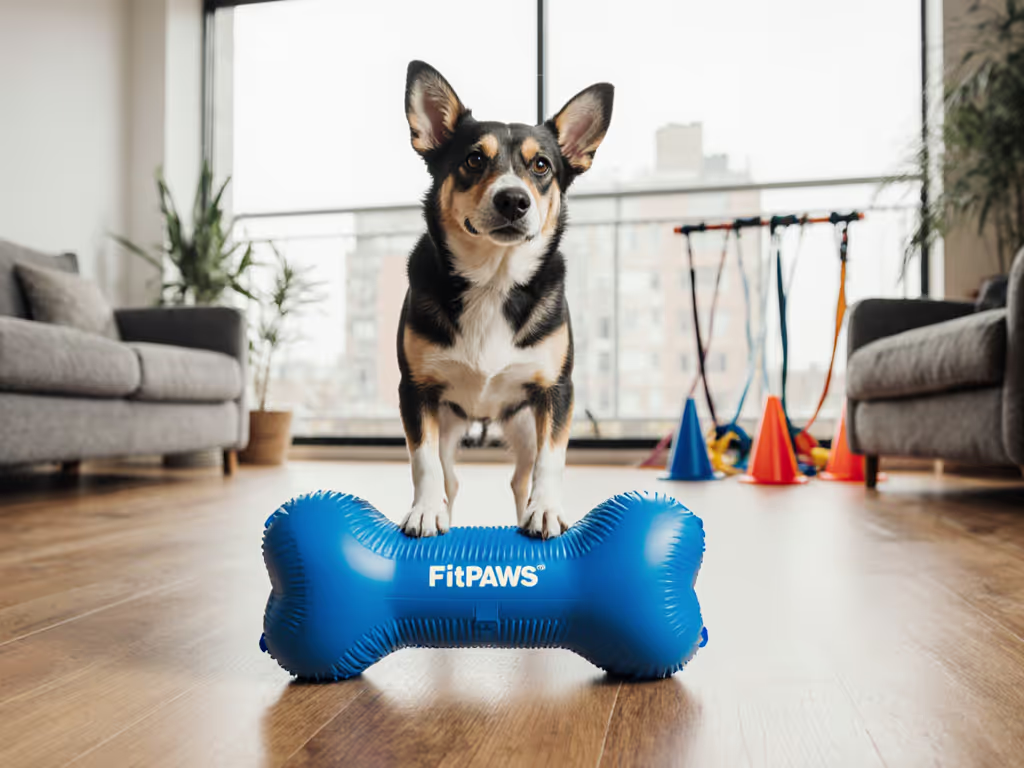
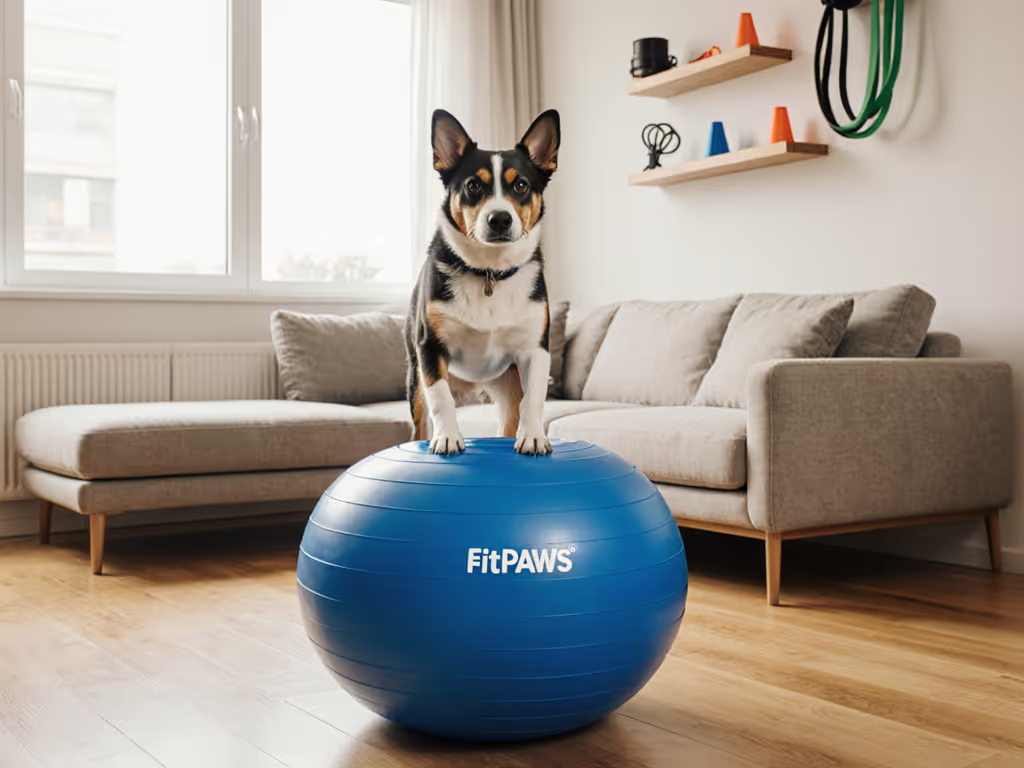
The FitPAWS Peanut is an inflatable, peanut-shaped stability ball designed specifically for canine conditioning. It's not a toy; it's a professional-grade training platform made from heavy-duty PVC formulated to resist damage from dog nails and toenails while providing superior grip.
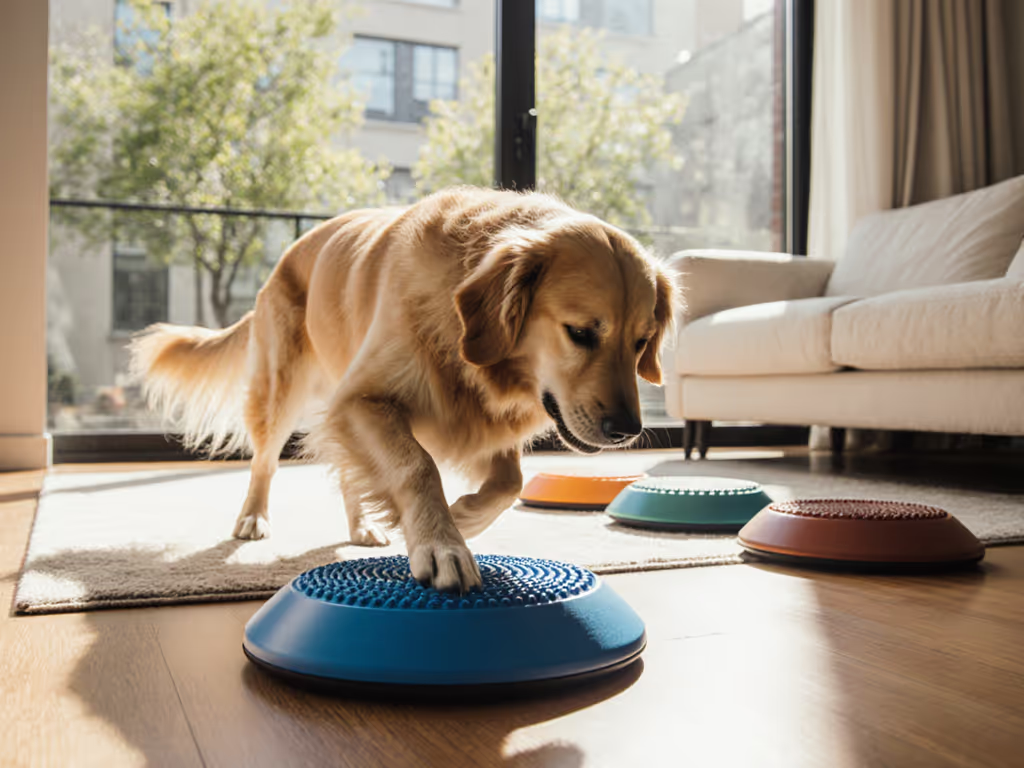
The shape isn't cosmetic. The wide, rounded ends give your dog ample paw placement for comfort, while the narrower middle section creates intentional wobble that forces your dog to recruit stabilizer muscles. Unlike a generic balance disc (which rocks in all directions), the peanut shape provides guided instability, so your dog learns to engage core and limb muscles simultaneously without the overwhelm of free-floating balance.
One side of the peanut has a textured, ribbed surface with a center cradle designed to prevent slipping and promote proper spinal alignment. This matters because a dog who hunches or arches excessively during balance work isn't building functional strength; they're reinforcing compensation patterns. Real value is cost-per-calm minute, not checkout-day sparkle, and that means choosing a tool that teaches correct form from the start.
When your dog stands on an unstable surface, their proprioceptive system fires immediately. Proprioception is your dog's internal GPS for where their body is in space; most dogs (especially apartment dwellers and dogs with limited spatial variety) run at a proprioceptive deficit. For the science behind this, see our canine proprioception training guide. The peanut forces neurological engagement: your dog's core automatically contracts, their rear end tucks, and their weight distributes evenly across all four limbs. Do this consistently, three to four times per week, and you're building the muscular scaffolding that protects joints, improves coordination, and, crucially, tires the brain as much as the body.
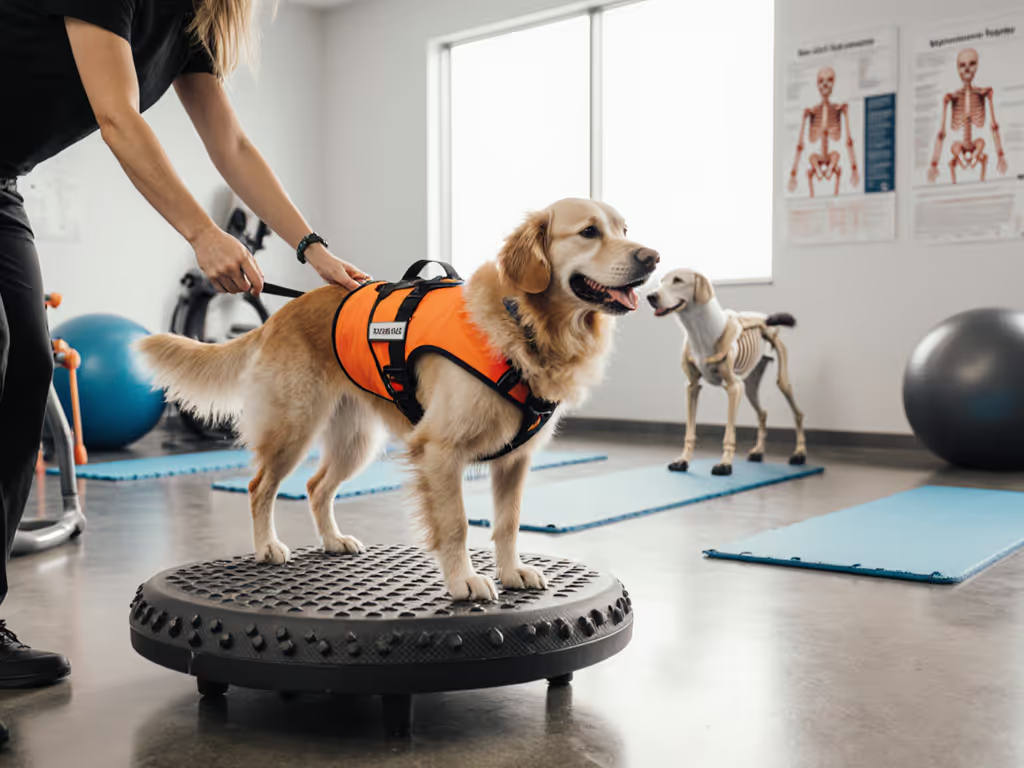
Testers who've used the peanut daily for two weeks reported visible improvement in their dogs' balance and stability, plus observable muscle engagement during exercises. One owner whose dog was undergoing physical therapy following spine surgery found the peanut "invaluable during her rehab process."
FitPAWS offers the peanut in multiple sizes, and this is non-negotiable territory. If you choose the wrong size, your dog won't use it effectively, and $80-$150 becomes a storage problem.
For core conditioning work (the most common use), your dog should stand on the peanut in a neutral, natural stance, no hunching, no arching. If they're scrunched up, the peanut is too tall. For stretching or weight-bearing exercises, the peanut should measure slightly under the highest point of your dog's shoulder.
If you have a 32-pound dog (roughly a medium breed), the medium peanut hits the mark; smaller dogs (15-25 pounds) often fit the small; large-breed dogs (70+ pounds) need the large. When in doubt, contact FitPAWS directly or consult with a canine physical therapist (a ten-minute conversation beats a wrong purchase).
I tested the peanut alongside other FitPAWS offerings to understand where it excels and where alternatives might suit your dog better.
The FitPAWS Balance Disc is smaller, lighter, and less bulky than the peanut. If your dog is under 20 pounds or you're apartment-bound with zero storage, the disc is less visually intrusive and easier to tuck behind a couch. However, the disc creates 360-degree instability; dogs new to balance work often feel overwhelmed. One tester found that her 7-pound dog handled the disc easily, but her 30-pound dog required careful progression and more one-on-one guidance.
The peanut's guided instability (front-to-back wobble, rather than all-direction rocking) makes it gentler for beginners and senior dogs, and the larger surface area allows more varied exercise patterns, stretching, weight-shifting, touch targets, and core engagement all on one tool.
The K9FitBone is another peanut-shaped platform, also inflatable, and comparable in price. The key difference: the bone shape is more symmetrical front-to-back and narrower in the middle, creating slightly sharper instability cues. It excels for dogs learning to track knees and rear feet forward and for lateral stability work. Some trainers prefer the bone for puppies and dogs with specific movement corrections.
The peanut, with its larger proportions and center cradle, is more forgiving for dogs recovering from injury, seniors, and multi-use scenarios (it's easier to position for stretching and for assisted weight-bearing). If your goal is pure core conditioning and you're comfortable coaching your dog through moderate wobble, either works. If you're rehabbing or introducing balance work for the first time, the peanut edges ahead.
The FitPAWS Balance Pad is a 15" × 18.25" foam platform that gives under pressure rather than rocks. It's the easiest entry point for dogs new to instability work; one tester used it primarily as a warm-up tool before moving to more challenging platforms. It's also the least bulky.
The downside: the pad provides minimal balance challenge once your dog acclimates, making it a limited long-term investment. The peanut and bone platforms scale with your dog's fitness, you adjust inflation to increase or decrease difficulty, so they remain useful across months or years of training.
Here's where I cut through the enthusiasm and talk about what actually happens when you bring a peanut home.
The peanut comes with a pump (reviewers note it's not impressive but functional) and extra stoppers. Inflation takes 5-10 minutes. Do not over-inflate; the peanut is measured by height, not PSI. Start at 60-70% of the maximum marked height, especially if your dog has never experienced balance work.
Spend the first week just getting your dog on the peanut without expecting work. Use high-value treats (cheese, small chicken pieces, not kibble). If your dog is clicker-trained, mark calm presence on the peanut. This is not about obedience; it's about building confidence and association.
Most dogs catch on within 30 minutes of exposure, particularly if they have prior target-training experience.
Once your dog is comfortable standing on the peanut, introduce gentle weight shifts. Lure them to step forward with a treat, then backward. Reward small movements and calmness. A 10-15 minute session, three times per week, is plenty at this stage. More isn't better; consistency is.
After two weeks of steady use, you'll notice your dog engaging their core automatically, their back legs will be more engaged, their stance wider, their breathing more deliberate.
Once your dog is solid on the peanut at 60-70% inflation, try increasing inflation slightly (to maybe 75-80%) or using it for stretching work: encouraging your dog to back onto the peanut for rear-end weight-bearing, or placing their front paws on it while their rear stays grounded. Both patterns build different muscle groups and keep the tool fresh.
You can also combine the peanut with other tools. One owner paired it with a balance disc for extended stretching sequences.
The peanut is bulky. It doesn't compress much and requires roughly a 4' × 2' floor footprint if deflated. Real talk: if you live in a studio apartment or share a closet with three other people, the footprint matters. Many owners store it under a bed, behind a couch, or in a corner of a garage. Plan for this before purchasing.
Quality-wise, the heavy-duty PVC is built to last. After returning three flashy toys that cracked within weeks, I kept two unglamorous workhorses from a discount bin, tracking cost-per-use on my fridge calendar alongside Rudy's rotation schedule. The peanut has that same DNA: it's not trendy, but it survives weekly use without degradation. One owner reported using theirs daily for two weeks with no visible wear.
Maintenance is minimal: wipe down with a damp cloth after wet-paw sessions, and store in a cool, dry place. For step-by-step upkeep that extends lifespan and safety, see our dog exercise equipment care guide. The pump will eventually wear (pumps always do), but replacement pumps are inexpensive and widely available.
A FitPAWS Peanut costs roughly $80-$150 depending on size, availability, and where you buy. That feels expensive until you map it against your problem.
Your pain point: "My dog has more energy than I can drain with walks, especially in winter or during heat waves. Fetch isn't an option (no yard, or too hot, or leash-reactive). I'm drowning in guilt because I can't meet their needs, and the destructive behavior is increasing."
Your current spend: Maybe $20-$40/month on toys they destroy in a week. Maybe $150+ per month on day-training or boarding to give them a break. Maybe stress, lost sleep, and apologies to neighbors about barking.
Buy a peanut ($120), use it three times per week for a year. That's 156 sessions. Cost per session: $0.77. If each session buys you 30 minutes of calm afterward (decompression), that's $0.77 for 30 minutes of household peace. Real value is cost-per-calm minute, and $0.77 per 30-minute window beats the $5-$10 per session you'd pay for training or boarding.
But there's a catch: you have to actually use it. If it lives untouched in your garage, cost-per-use becomes infinite. The peanut works best as part of a rotation: three tools, three different movement patterns, same 10-15 minutes daily. One owner built a simple rotation on her fridge: Monday and Wednesday, peanut; Tuesday and Friday, balance disc; Thursday, rest day; weekends, outdoor hikes if weather allows. Her dog's destructive behavior dropped 60% within three weeks because the brain work was finally matching the body's energy output.
That's buy once, use often.
The peanut is not appropriate for dogs with active joint injuries, uncontrolled epilepsy, or orthopedic conditions without vet sign-off. Review essential precautions in our dog exercise safety guide. Physical therapy dogs? Absolutely, but get your vet's green light first. Puppies (younger than 12 weeks) with soft growth plates should avoid the peanut or use it only under supervision with minimal inflation to reduce impact loads.
Senior dogs and dogs with mild arthritis often benefit, especially if the peanut is under-inflated (softer) to reduce stabilization demand while still building proprioception.
Do not allow unsupervised use. The peanut is training equipment, not a toy. Unsupervised chewing or play can lead to punctures or ingestion of PVC fragments.
The peanut is not a silver bullet. It won't fix a dog with genuine anxiety or a deep behavioral problem; it's a conditioning tool, not a behavioral modifier. It also won't solve leash reactivity or food aggression on its own.
It also requires active participation from you, consistency, clicker training or lure training, treats, and scheduling. If you're looking for something your dog can "just use," this isn't it.
Storage can be awkward, and the pump that comes with it is basic. You might invest another $15-$25 in a better manual pump or electric pump if you plan to adjust inflation frequently.
If the peanut doesn't fit your scenario, consider:
None are inherently "better." They're contextual.
Testers and actual owners consistently mention:
The most useful testimonial came from an owner whose dog was undergoing physical therapy after spine surgery: "Invaluable during her rehab process." That's not hype; that's a vet-informed, outcome-specific endorsement.
Buy the FitPAWS Peanut if:
Skip or defer if:
The bottom line: The FitPAWS Peanut is a legitimate training tool that delivers measurable results when used consistently. It's not glamorous, it takes space, and it requires your active participation. But if you're looking for a buy once, use often piece of equipment that tires your dog's brain and body, improves coordination and joint health, and costs pennies per session, it's hard to beat. Real value is measured not in initial price but in how many calm mornings and focused sessions it buys you over the years. For most households with space and commitment, that math works.