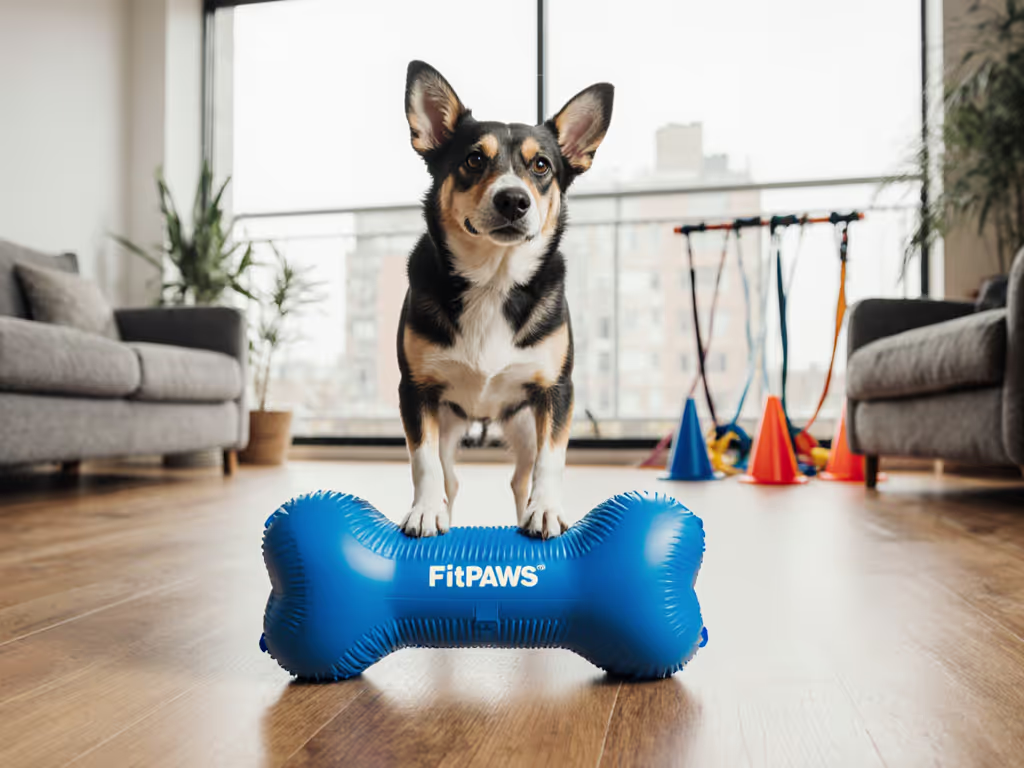
FitPAWS Balance Bone: Worth the Investment?
4th Apr•4 min read
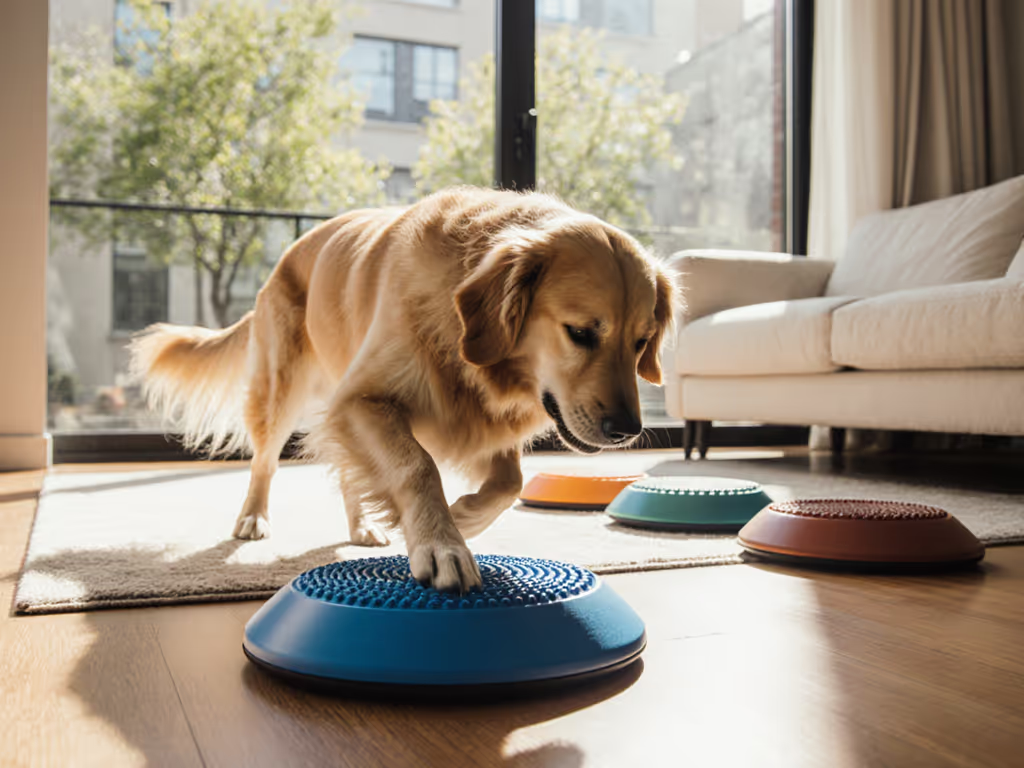
When every dollar counts and your dog has energy for three households, the last thing you need is a wobble board collecting dust in a closet. Dog balance disc comparison matters because the wrong choice drains your wallet and leaves your pup unimpressed. Real value isn't checkout-day sparkle; it is cost-per-calm minute, the balance equipment you'll actually use twice a week without flinching at price tags. I've tested what works for real schedules and real budgets, so you can build a rotation that pays for itself.
A balance disc creates an unstable surface that forces your dog's stabilizing muscles to fire constantly. Unlike a flat floor, each micro-movement your dog makes while standing or shifting weight recruits their core, proprioceptive system (body awareness) and limb musculature. This is especially valuable for dogs living in apartments, facing mobility loss with age, or recovering from injury (situations where traditional exercise falls short).
Beyond the physical payoff, balance work delivers cognitive engagement. Dogs must concentrate to stay upright; boredom and destructive behavior often drop noticeably after consistent sessions. For time-strapped owners juggling demanding jobs and anxious dogs, a 10-minute focused balance session can be as restorative as a 30-minute chaotic walk.
High-energy herding and sporting breeds, senior dogs losing hind-end strength, puppies developing body control, and anxious dogs needing structured mental work all thrive on balance training. Rescue dogs with unknown backgrounds often benefit too; proprioceptive exercises rebuild confidence and body awareness. Even stable, healthy dogs see fitness gains: improved coordination, better weight management, and stronger joints over time.
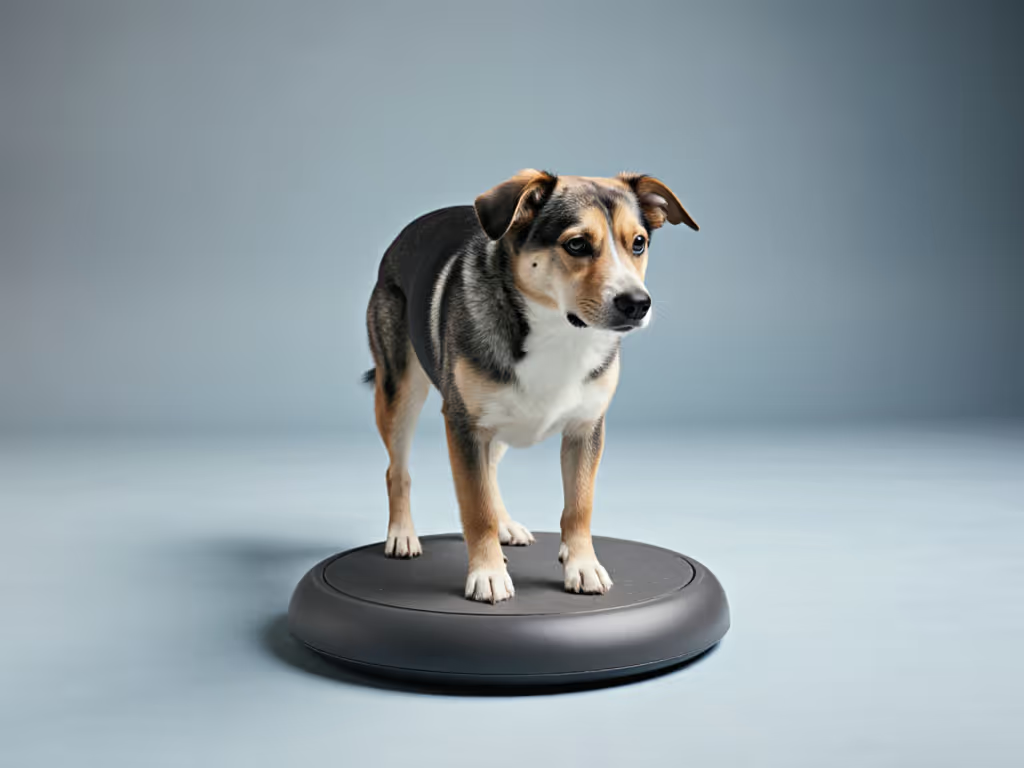
I evaluated five major brands across inflation stability, durability, surface design, size range, price-per-use math, and real-world longevity. Here's what I found. For a head-to-head brand comparison, see our FitPAWS vs TotoFit balance disc test.
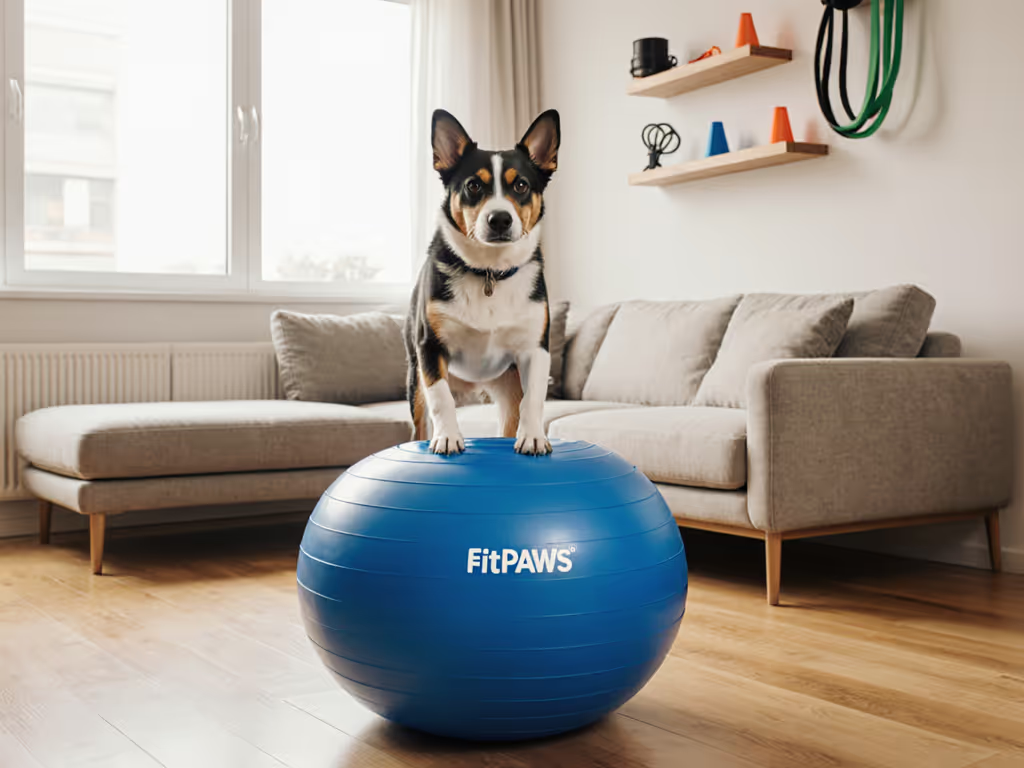
Price Range: $40.99-$68.99 (14", 18", 22" sizes)
Core Strength: Dual-textured surface (smooth + sensory nubs), inflatable, adjustable difficulty by air level
Availability: Widespread; most major online retailers stock it
Pros:
Cons:
Durability & Cost-Per-Use Math: Built anti-burst, but inflatable = eventual micro-puncture risk. At $40-$69, recoup your investment over 100-150 sessions ($0.27-$0.69 per session). Reasonable if you use it 1-2 times per week. If relegated to storage, cost-per-calm-minute tanks fast.
Storage Footprint: Compact when deflated; rolls up like a yoga mat.
Price Range: Mid-tier (est. $50-$80, specifics vary by retailer)
Core Strength: Flat base (prevents wobbling side-to-side), vertical support structure, fixed angle
Best For: Puppies, seniors, dogs with weak confidence
Pros:
Cons:
Durability & Cost-Per-Use Math: Non-inflatable construction means zero puncture risk. Durable polymer holds up to weekly use for years. Cost-per-session runs $0.15-$0.35 over a 3-5 year lifespan if used consistently. Excellent for owners who commit to a rotation.
Repair & Maintenance: Minimal; just wipe down and store dry.
Price Range: Lower end (search results suggest discount-bin positioning)
Core Strength: 14" diameter, dual-textured surface, anti-burst PVC, includes hand pump
Best For: First-time buyers testing the concept
Pros:
Cons:
Durability & Cost-Per-Use Math: Unknown long-term durability; PVC-based construction may degrade faster than premium alternatives. Reasonable risk if you're testing the concept, not ideal for multi-year commitment. Cost-per-session very low upfront, but replacement risk is real.
Storage Footprint: Compact; small diameter fits most closets.
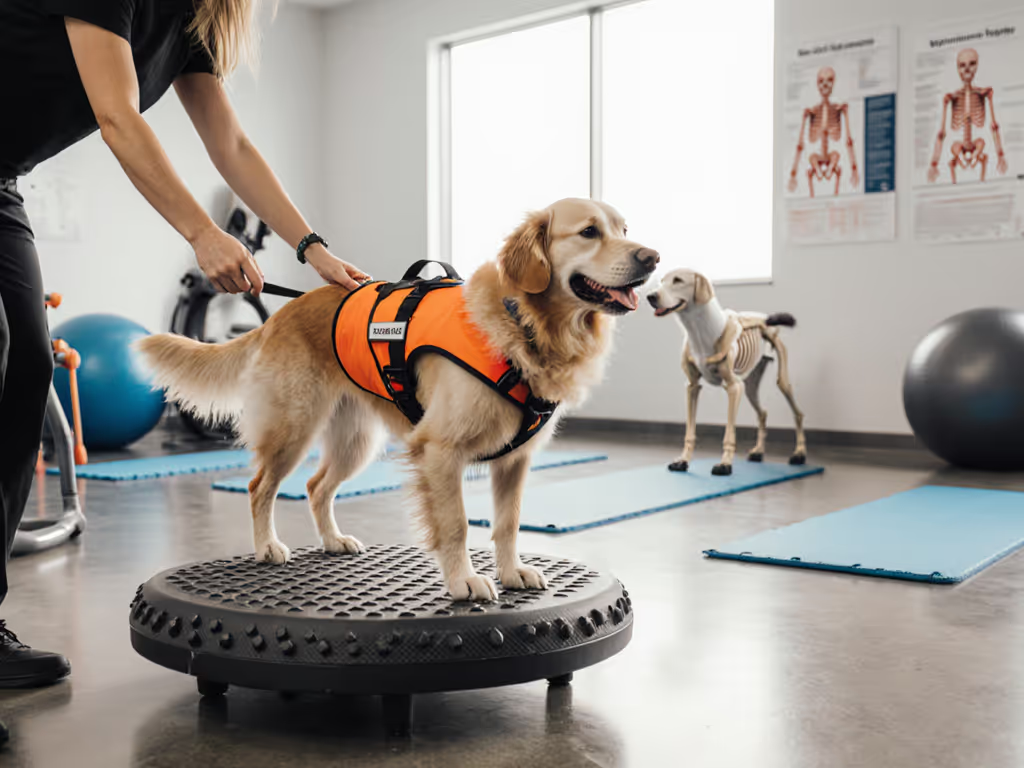
Price Range: Premium ($93.99+ per search results)
Core Strength: Designed by Swiss canine physiotherapist; non-slip surface, balanced challenge
Best For: Owners working with trainers or rehab professionals
Pros:
Cons:
Durability & Cost-Per-Use Math: Premium construction likely justifies price over 2-3 years. Cost-per-session runs $0.40-$0.60 for regular users; excellent for professionals or committed enthusiasts, tougher to justify for casual use.
Storage Footprint: Compact; similar to FitPaws.
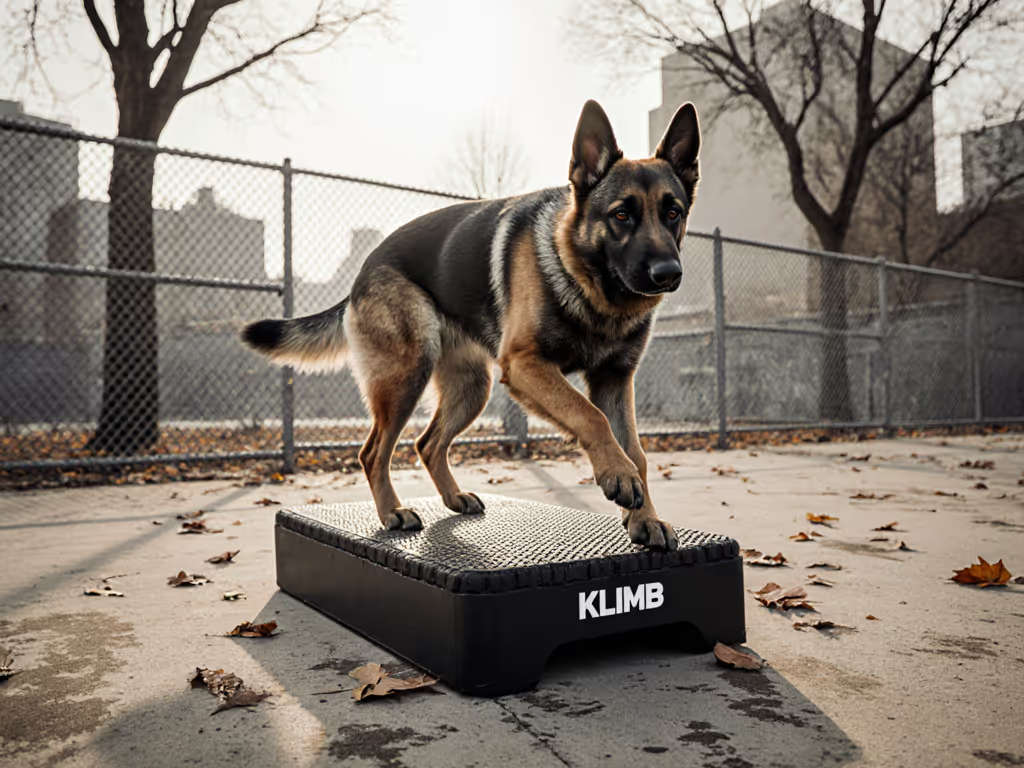
Price Range: Mid-tier
Core Strength: Very unstable surface; high challenge level
Best For: Advanced dogs or dogs already experienced with balance work
Pros:
Cons:
Storage Footprint: Bulkier than round discs; requires more space.
After tracking cost-per-use and watching which tools gather dust, I recommend a hybrid approach for middle-income households with one to two dogs:
A 10-minute session might look like: 2 min warm-up (light walking on flat surface), 4 min active balance work (2 min on wedge shifting weight, 2 min on round disc), 4 min cool-down (sit, hand touches, decompression). For a science-backed session order, use our exercise sequencing guide. Repeat 2-3 times per week. Cost per session across three tools: $0.30-$0.50. At that rate, you'll recoup your investment in 6-12 months of consistent use.
The rotation also addresses maintenance: each tool gets 5-10 days rest between sessions, extending lifespan and preventing boredom-driven avoidance.
Balance work looks simple but carries real injury risk if rushed. For broader precautions and warm-up routines, read our exercise safety guide. Before introducing any disc:
Punctual progression prevents injury and keeps dogs engaged. Skipping steps (jumping straight to an advanced disc) leads to soreness, avoidance, and wasted money.
Inflatable discs require occasional re-inflation (check every 2-3 weeks). For full care routines that extend equipment lifespan, see our equipment care guide. Store in a cool, dry place away from direct sunlight; UV degrades PVC. Non-inflatable tools (wedges, pods) need only a wipe-down after muddy sessions and a dry storage spot. If you're budget-conscious, non-inflatable tools reduce hidden maintenance costs and replacement stress.
Ask yourself three questions:
If you're returning flashy toys that crack within weeks, it's time to shift mindset. Durability compounds. A $70 disc used consistently over three years outperforms a $20 gimmick used twice. Stretch the budget on gear that earns its place in your rotation, not on novelty. Track cost-per-use openly; let the math guide you.
Balance discs are legitimate tools for tired dogs, anxious dogs, and dogs aging into weaker joints. They're not miracle-workers, but they're allies in a broader program of physical and mental engagement. Start with one stable surface, commit to a 4-week trial, and measure the outcome in post-session behavior, energy distribution, and handler calm. If your dog settles faster and seems stronger, scale up to a second surface and a regular rotation.
Before purchasing, cross-reference trainer reviews and vet recommendations for your dog's age and condition. Join online canine fitness communities (Reddit's r/Dogtraining, Instagram trainers you trust) and ask for user reports on durability in your climate. Real owners' cost-per-use data matters more than marketing claims.
The balance disc that sticks around is the one that fits your schedule, your dog's learning curve, and your budget without apology. Choose accordingly, track the metrics that matter to you, and watch your dog's confidence (and your own) build week by week.