Best Value Dog Exercise Gear for Small Spaces & Travel
3rd Oct•7 min read
When selecting dog exercise equipment for year-round use, the critical factor often overlooked is whether your chosen weatherproof dog fitness gear can genuinely withstand environmental stressors while protecting canine joints. As someone who analyzes movement patterns daily, I've learned that surface stability and material integrity under weather extremes directly impact joint safety, making gear selection not just about convenience, but about long-term mobility. For fundamentals that prevent overuse injuries, see our dog exercise safety guide. Protect the joints today to unlock fuller movement tomorrow.
The question isn't merely "what equipment works," but "what equipment works safely through seasons without compromising joint integrity." This analysis prioritizes biomechanical safety alongside weather resistance, recognizing that your dog's physical resilience depends on thoughtful equipment choices that account for age, weight, and surface interaction.
Weatherproofing extends beyond simple water resistance, it is about maintaining structural integrity when wet, cold, or hot. Consider this: a steel-framed weave pole that develops micro-corrosion from winter moisture creates an unstable surface that forces compensatory movements, straining hock joints over time. Optimal gear maintains consistent surface properties through weather extremes:
surface notes: Always conduct a post-rain fit check by walking barefoot on equipment surfaces, your skin's sensation mimics paw sensitivity to micro-texture changes that affect joint loading.
Your climate zone dictates which weatherproofing elements matter most:
| Climate Challenge | Critical Feature | Joint Safety Impact |
|---|---|---|
| Extreme Heat | UV-stabilized materials | Prevents surface softening that creates unstable footing |
| Heavy Rain | Non-absorbent surfaces | Eliminates slippery biofilm growth on equipment |
| Freezing Temperatures | Flexible cold-weather polymers | Maintains surface integrity to prevent joint-straining micro-movements |
| High Humidity | Rust-proof hardware | Ensures stable equipment bases that don't develop dangerous wobble |
caution-first disclaimer: In my experience working with reactive dogs in Belgrade's variable climate, even "weatherproof" equipment requires seasonal recalibration. What works in spring may become hazardous in summer heat without adjusted usage protocols. For cold-season adjustments, see our winter dog exercise safety guide.
Not all "weatherproof" claims deliver equal joint safety. When evaluating outdoor agility gear comparison options, assess these often-overlooked elements:
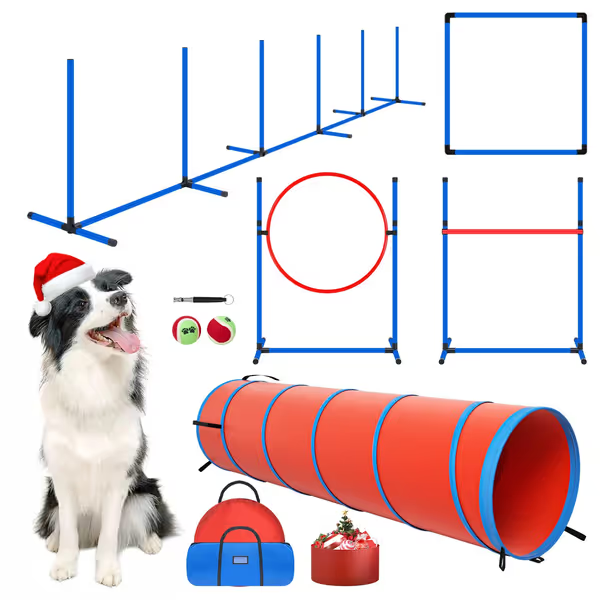
The Polar Aurora set addresses several critical pain points through its multi-component design, particularly its adjustable jump heights that accommodate different developmental stages. age/weight modifiers become essential here, since what works for a 10-week-old puppy differs significantly from a senior dog's needs, even within the same household. If you're outfitting a young dog, start with our puppy exercise equipment guide.
Puppies (under 18 months for large breeds):
Adult Dogs (18 months-7 years):
Senior Dogs (7+ years or breed-specific equivalents):
Based on my analysis of equipment failures, these three errors most frequently compromise both weather resistance and joint safety:
caution-first disclaimer: That time I worked with a foster dog recovering from a soft-tissue strain taught me that even minor surface inconsistencies (ones we barely notice) can derail recovery when compounded through repeated use.
True weatherproofing requires behavioral adaptation alongside equipment selection. Implement this three-part system:
Remember that comfort is a training aid, when dogs feel secure on equipment regardless of weather conditions, their movement patterns remain biomechanically efficient, reducing cumulative joint strain.
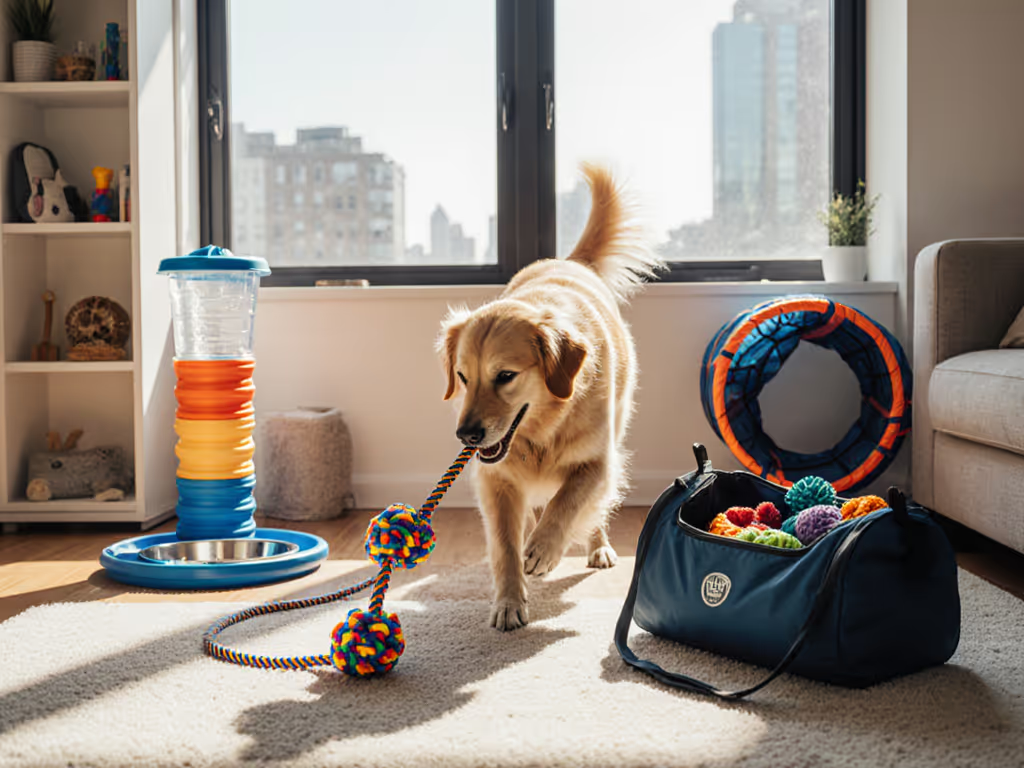
For apartment dwellers and small yards, focus on modular equipment that:
age/weight modifiers become critical here, small-space equipment must accommodate multiple dogs of different sizes without creating joint-straining positioning requirements. Look for gear with clear weight limits that respect canine biomechanics, not just marketing convenience. Apartment trainers can also review our portable small-space gear picks for weatherproof options that fold flat and travel well.
When comparing weather-resistant dog training tools, move beyond basic durability claims to assess how equipment performs under actual weather stressors while maintaining joint-friendly properties. The most valuable gear provides consistent, predictable surfaces regardless of environmental conditions, this consistency allows dogs to develop reliable movement patterns without joint-compromising micro-adjustments.
Your commitment to weather-appropriate, biomechanically sound equipment creates more than just convenient training, it builds the physical foundation for decades of joyful movement. Remember, the right dog exercise equipment isn't about the most features, but the most thoughtful protection of those precious joints that carry your companion through life's adventures.