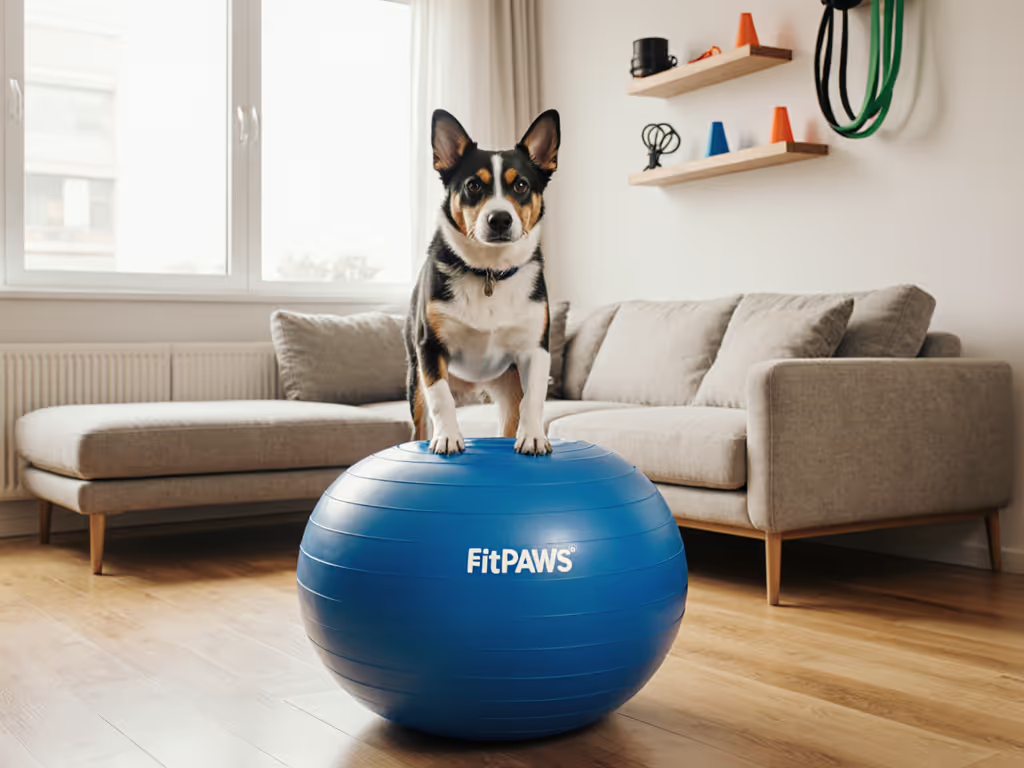
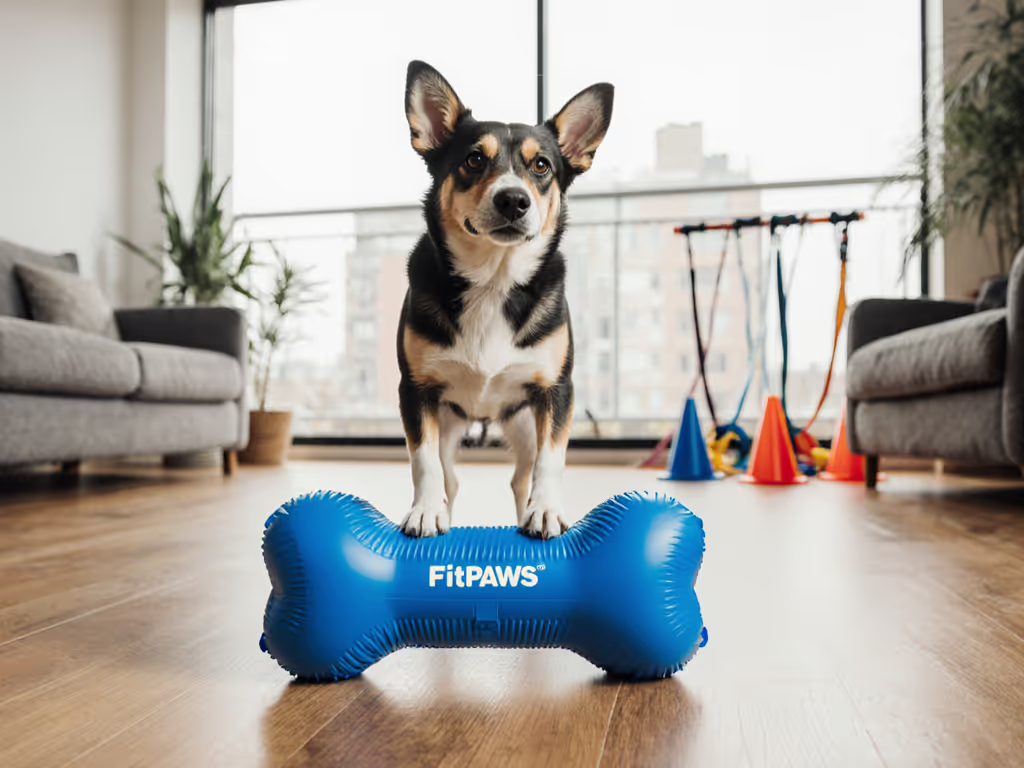
FitPAWS Balance Bone: Worth the Investment?
4th Apr•4 min read
If your training dog equipment selections are making you pause, wondering if a platform is overkill, or whether your dog's conditioning setup is actually protecting joints or just filling a closet, you're asking the right question. Working dog conditioning tools aren't about filling a room; they're about building a smarter routine where every surface, strap, and session teaches your dog's body to move confidently without breaking down. This FAQ unpacks the real-world choice points that matter most.
Not quite. Walking is maintenance; targeted conditioning is precision. A service dog works on-task: offering balance support, bracing through downward pressure, or moving through unpredictable terrain. That's not casual movement. Without specialized service dog gear designed to distribute force evenly, you risk creating compensatory strain: a dog shifts weight to protect one leg and overloads the opposite shoulder, or braces repeatedly against an ill-fitting harness and develops muscle imbalance.
Research on canine biomechanics confirms that harness fit and surface choice reshape how a dog recruits muscles. Poor fit = poor patterns. Poor patterns = injury risk that compounds over years of service. Learn essential exercise safety guidelines to start slow and avoid injury.
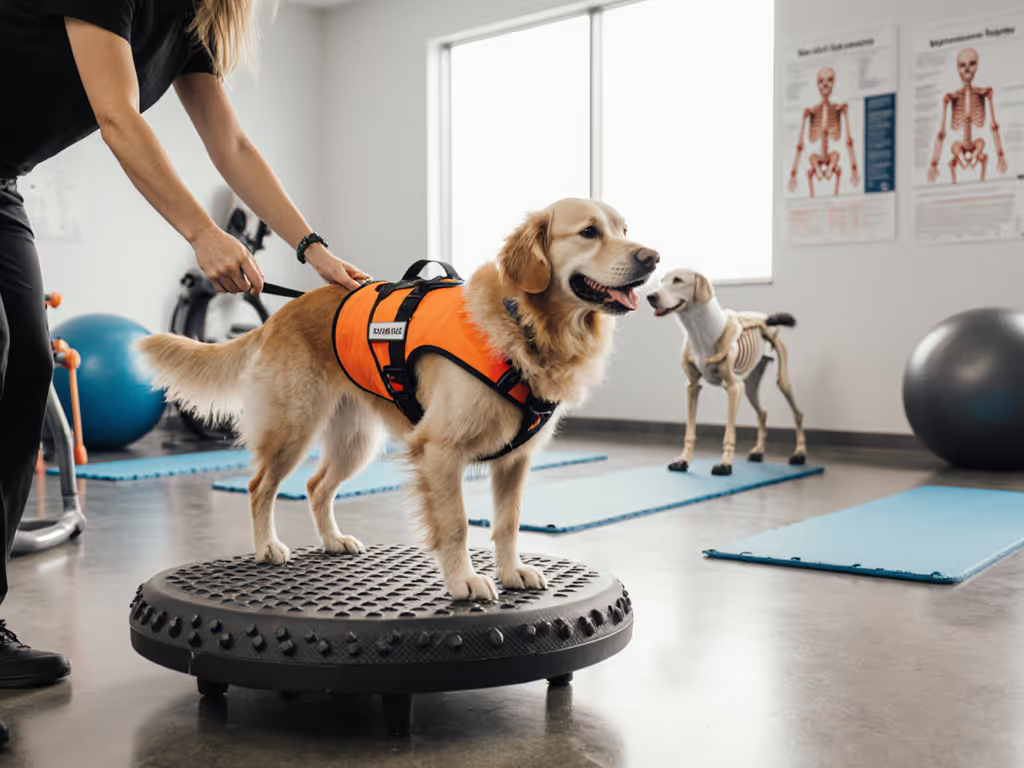
Start with fit checks. A proper specialized service dog gear harness, especially one used for mobility tasks like bracing or balance assistance, should meet these non-negotiables:
If your harness is riding up into the armpits, poking into the shoulder blade, or sliding sideways when the dog moves, it's working against joint safety, not for it. A caution-first assessment: when in doubt, consult a veterinarian or certified service dog trainer before scaling up intensity.
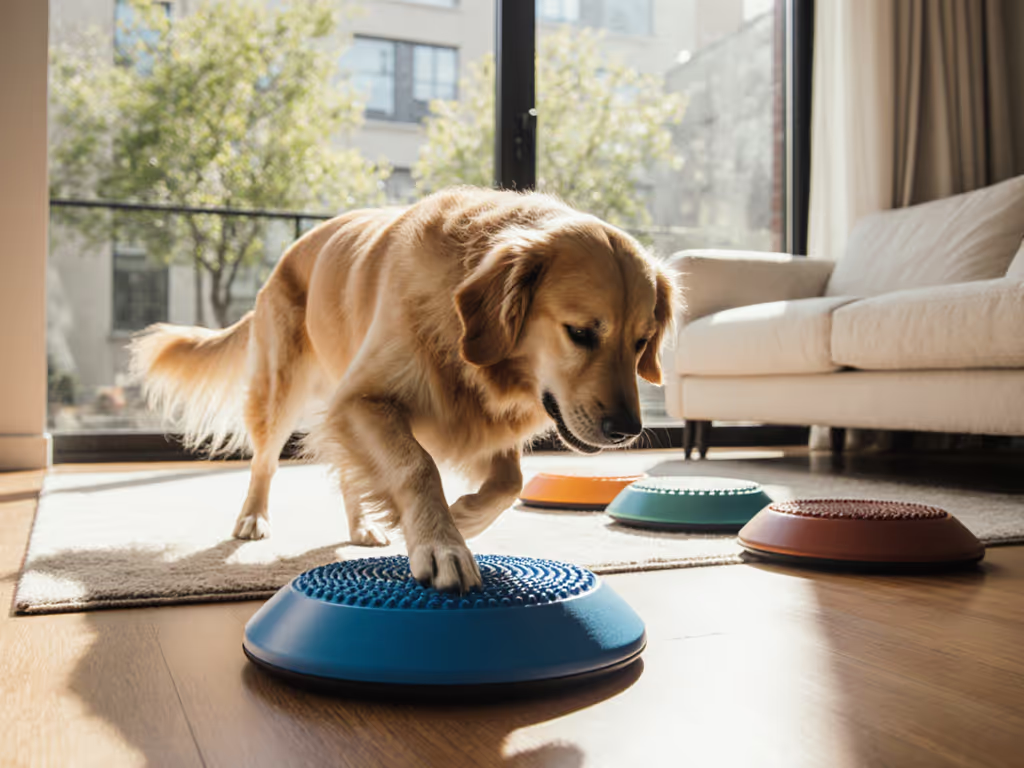
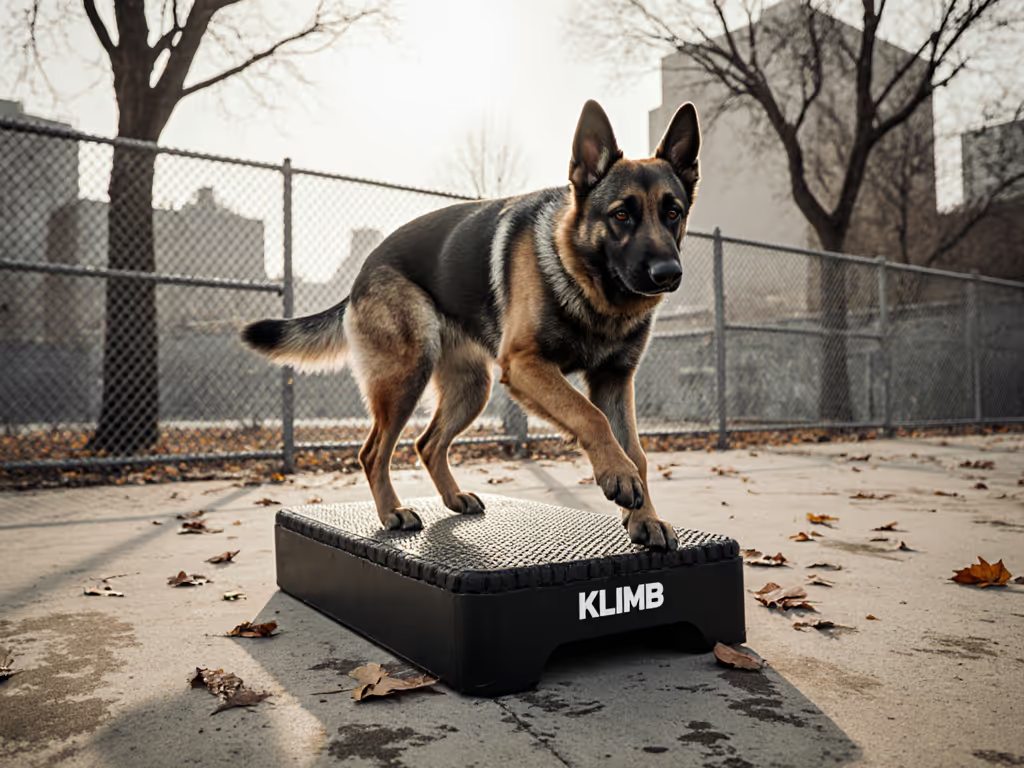
Stable platforms are foundational for task-specific fitness equipment work because they force deliberate foot placement. When a dog bounces on grass or works on slippery tile, compensation is easy; they just adjust without conscious placement. On a platform (typically 4-8 inches high, nonslip), the dog must check each foot's landing. This builds proprioception, rear-end awareness, and the exact neuromuscular precision a service dog needs for safe bracing or balance work.
Surface notes for your setup:
If your dog is jumping on and off, lunging between obstacles, or working in frantic circles, the surface isn't the problem; the pace is. For a science-based overview of when to use stable vs unstable tools, see why surface choice matters daily. Slow is smooth, smooth becomes fast. Precision before speed always.
Age/weight modifiers are critical.
Puppies (growth phase, roughly 3-14 months depending on breed): Stick to ground-level work, no jumping, minimal vertical load. Soft surfaces (grass, rubberized mats) reduce impact shock to developing joints. Short 2-5 minute sessions; longer sessions aren't endurance training, they're joint stress. Get age-appropriate picks in our joint-safe puppy equipment guide.
Adolescents (14 months to 2.5 years): Growth plates are closing, but orthopedic maturity isn't complete. Introduce low platforms (2-4 inches) and gentle inclines. Still avoid repetitive jumping or high-impact turns. Progress gradually; if introducing a new surface, spend a full week at that level before advancing.
Mature dogs (2.5-7 years): Peak capacity for load work and varied surfaces. Can handle bracing, balance tasks, and longer conditioning sessions (15-20 minutes). Watch for early signs of joint stress: reluctance to jump onto platforms, shortened stride, or favoring a limb after sessions.
Seniors (8+ years): Scale back intensity and duration. Shorter, frequent sessions trump one long session. Soft surfaces reduce jarring; keep platforms low and optional. Warm-up becomes non-negotiable: stiff joints need 5-10 minutes of easy walking before conditioning work.
Yes, but conditionally. Protective paw mittens or dog booties aren't cosmetic; they're biomechanical. A dog's pads are sensitive and prone to cuts, burns (in hot climates), and salt/chemical irritation (winter/de-ice). When a paw is injured or sore, the dog compensates, shifting weight, shortening stride, rotating limbs unnaturally. That compensation ripples through hips, knees, and elbows.
Booties also serve a training signal. Many dogs, especially rescues or anxious dogs, recognize booties as a cue for focused work, similar to how a harness signals "this is a task session, not casual roaming."
Practical fit check: Booties should be snug but allow full range of motion. If your dog can't flex their toes or the bootie slips, it's either the wrong size or material. Acclimate gradually; wear them indoors for 5-10 minutes before outdoor work. A caution-first note: not all dogs tolerate booties; some panic or freeze. If your dog is distressed, stop and try a different brand or style.
Extreme heat, ice, or poor air quality changes conditioning strategy. In scorching conditions, pad protection becomes urgent (hot pavement = burn risk). In snow and ice, salt and paw irritation spike. In smoke-heavy seasons or high heat, shorten sessions and prioritize indoor alternatives.
Indoor options: platforms, ground poles, ramp work, mental stimulation games (scent work, retrieval). These build fitness and focus without environmental stress.
Assume your dog is starting from baseline fitness (regular walks, but no structured conditioning). A progression ladder looks like this:
Week 1-2: Establish comfort with the environment and equipment. If using a harness for the first time, spend sessions simply acclimating, walking, standing, rewarding calm. Use these step-by-step desensitization techniques to introduce new equipment without fear. No load or pressure work yet.
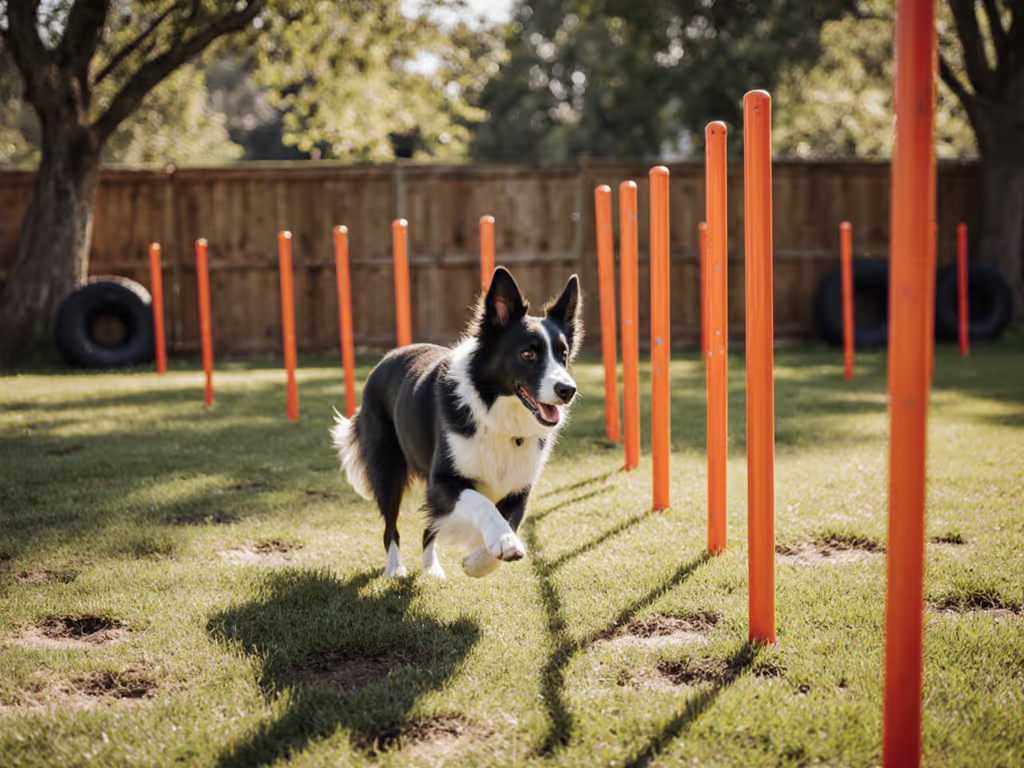
Week 3-4: Introduce easy surfaces (grass, soft mats). Simple ground-level tasks: walk over ground poles, stand on a low platform, weight-shift on command. Sessions stay short, 5-10 minutes.
Week 5-8: Add mild inclines or slightly taller platforms. Begin teaching balance or brace cues without load. The dog learns the position; you apply zero pressure.
Week 9+: Introduce minimal pressure (bracing: no more than a few pounds, only momentarily, only when the dog is standing square). Load is applied gradually and only after veterinary clearance.
If your dog shows soreness, reluctance, or altered gait at any stage, pause and consult your vet. Pushing through is never the answer; setback is often a teacher. Go slow to go far.
Short and focused beats long and sloppy. Most conditioning routines are 10-20 minutes, 3-4 times per week. A session isn't measured by time alone; it's measured by quality reps and mental engagement. Three sets of five controlled reps on a platform, with full rest between sets, is more valuable than thirty unfocused repetitions.
Warm-up and cool-down are non-negotiable. Five minutes of easy walking before conditioning prepares joints and muscles. Five minutes of easy walking after allows heart rate to stabilize and muscles to begin recovery. This ritual signals to your dog: we're transitioning into focus mode, and later, we're transitioning out.
Tired dogs settle calmly, relax in their resting space, and maintain normal appetite and thirst. Over-tired dogs may appear hyperactive, become snappy or anxious, stop eating, or develop excessive panting or trembling. An over-worked dog also often shows altered gait, stiffness or lameness, especially noticeable the morning after a session.
In my early experience with a foster who struggled with soft-tissue strain, I learned that measuring success isn't about how much work she did; it's about how controlled and calm her post-work state was. When I swapped long fetch sessions for measured ground-pole work and ramp progressions, her recovery was faster and her confidence deeper. Small, precise choices turned chaos into comfort.
No. More is often the opposite of better. Overwork causes cumulative microtrauma to joints, cartilage, and soft tissue. It also invites behavioral reactivity; a dog that's pushed past capacity often becomes reactive or anxious in daily life. Protect the joints today to unlock fuller movement tomorrow.
Start here:
Equipment is a tool, not a solution. But the right tool, used thoughtfully with patience and precision, turns every session into an investment in your dog's long-term confidence, strength, and joint health. Slow is smooth, smooth becomes fast.